
An ongoing challenge for demographers is to know the number of international migrants of a country. While the lack of records and the presence of undocumented migrants hinders the numbers of people who come to a country – the in-migrants – at least they are present in the territory, offering possibilities to account for them. On the other hand, provide estimates for those leaving a country – the out-migrants – is a much more complicated process.
It is argued here the possibilities of use of population censuses to calculate out-migration based on questions about former residents of the country living abroad. It is believed that the population censuses continue to be a major source of information on international migration, especially for the territorial scope of this type of survey. Since migration is usually a rare event, with a high spatial concentration, it is difficult to produce general information based on surveys that not cover the whole territory of a country.
Based on the census, the number of out-migrants can be measured directly or indirectly. The «direct» information are those drawn from the answers given by respondents to the census questions. «Indirect» data are derived from answers to one or more questions of from other data sources and, usually, undergoing demographic modeling to produce estimates.

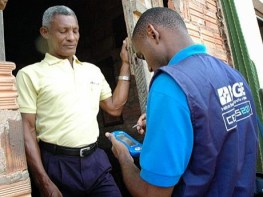 O reconhecimento de tais erros requer avaliações da cobertura e qualidade dos censos. Erros de cobertura estão relacionados a omissões e inclusões indevidas de pessoas e/ou domicílios, enquanto erros de qualidade são aqueles ligados às informações coletadas de pessoas e/ou domicílios efetivamente recenseados. Existem basicamente duas formas de se avaliar a cobertura de um censo demográfico: através de técnicas diretas e através de técnicas indiretas.
  e some indigenous peoples, homeless, undocumented migrants or the gypsies, a typical itinerant people with «inaccurate» residence condition.
 de Nicolás Sacco «
 OLAC
OLAC 